
@moderator
Forum Replies Created
-
AuthorPosts
-
 ModeratorKeymaster
Adrian Weston owns Chihili Q. This article is mentioned on our site here.
Are you still out there Adrian?
Marilyn, the moderator
ModeratorKeymasterNot all Nic 38’s were fitted with a secondary fuel tank – it was an option to have it added under the lazarette seat(s).
For example, our Rainshadow (hull #126) does not have these wing tanks, which leaves us very deep storage instead.
Marilyn the Moderator
ModeratorKeymasterErik and Margriet –
There are a couple other forum conversations that discuss windvanes – did you see these topics already?
Who’s got self steering gear installed
I can add that we used our Monitor windvane in our 2016 Pacific crossing from Seattle to Hawaii. It gave us some grief because of 1) our inexperience at knowing the appropriate paddle size for the wind conditions, 2) Rough following seas with many boarding waves that bashed the paddle, 3) chafe of the control lines.
Despite our past problems, mostly due to inexperience, we view the Monitor windvane as a critical piece of equipment for future passages and will do what it takes to make it more reliable for us – and we do believe that is achievable. We’ve found Scanmar, the makers of the Monitor, to be extremely helpful despite the fact that our unit is very old and we are not the original purchaser.
We have no experience with other windvanes so cannot comment.
Marilyn
ModeratorKeymasterJohn let me know he went for an Endurance 37 rather than a Nic 38. I’ve deleted his account.
Fair Winds, John. Enjoy your new sailboat.
ModeratorKeymasterWe’ve been rebedding or replacing all portlights on Rainshadow this year because they were leaking.
In summary, we are simply removing and rebedding some portlights, we had to reglaze some portlights before rebedding, and we installed 3 new opening portlights (we did sail to warmer climates and now we need much more ventilation!).
I just added a post about this effort to our personal website, which you can read here.
Marilyn, Moderator
ModeratorKeymasterThanks Ollie for the offer! Rainshadow doesn’t have teak decks, but I’m curious about the teardown process.
Was it destructive to remove your icebox? Sometimes I wonder if we should remove it to get better access for insulating, or replace it.
For the primary winches, we’re having trouble accessing some of the bolts that hold down the winch bridges. Were there any surprises when you removed yours?
Have you seen any aluminum backing plates bedded in the FRP that need repair/replacing? For example, at the stanchion bases? We are rebedding everything that penetrates the deck before backing plates etc. get damaged from failed sealant, and I wonder about some of ours due to stress cracks on the deck.
As moderator, I can post pictures within the forum postings, but I am sorry you cannot. If you can post photos elsewhere, you can add links to those photos here – see this posting for more info.
Cheers – Marilyn, moderator
ModeratorKeymasterWe use Lubrimatic Marine Corrosion Control and Trailer Wheel Bearing Grease, which is a marine grade brown grease.
Marilyn
ModeratorKeymasterJeremy Lines confirms that Ayla is hull #118. I have updated the Member Directory accordingly.
Marilyn, moderator
ModeratorKeymasterDuncan –
Rainshadow, hull #126 has a pressure switch on the gearbox. If the oil pressure is not high enough, the gearbox will not engage. Are you sure you have enough oil in the gearbox sump? Or could the pressure gauge be failing?We have never experienced the behavior you are seeing, but I just thought I would the simpler questions before you consider a gearbox rebuild – just in case.
As you say, the prop will freely spin, so the shaft rotation does not mean the gearbox is engage.
Marilyn
ModeratorKeymasterHi Ollie – here some info that may help re: Q.2
The original sales brochure, which you can find on our site here, says in the specifications section:
Glassfibre hull to Lloyds 100A specification
Our hull #126 shows its Lloyds number on a plate that Halmatic mounted inside the transom. This plate is viewable from the aft deck locker.
Marilyn, moderator
ModeratorKeymasterRoger provided some more photos to illustrate his points.
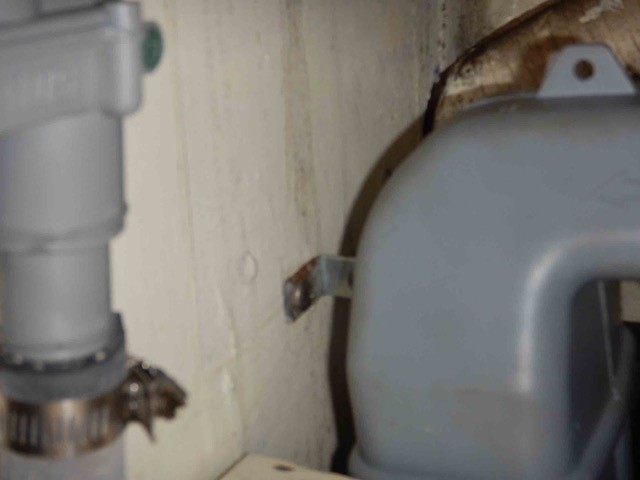
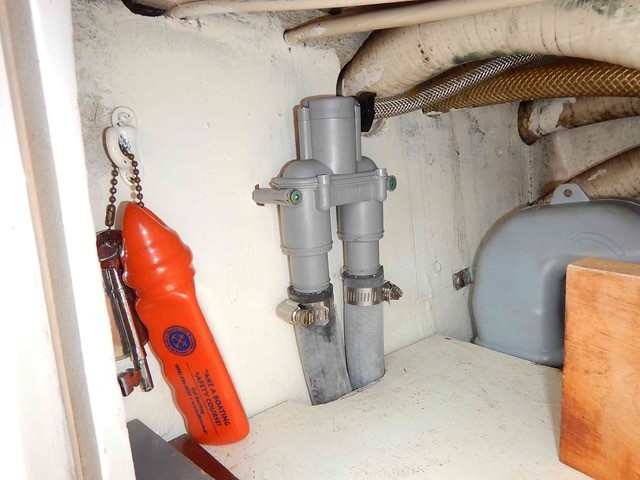


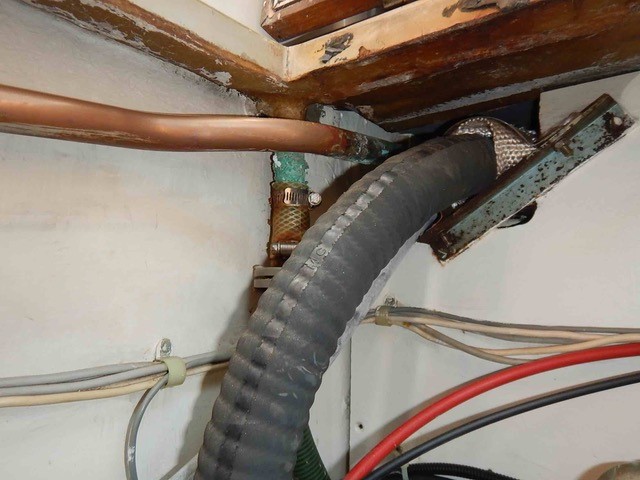 ModeratorKeymaster
I received email from Kari and Lawrence that they are now proud owners of Nicolisa, which is most likely hull #134. I have updated the Member Directory accordingly.
During their delivery home, they recounted some exciting sailing conditions for their first time out in an unknown boat, and gave this rave review:
once we had some canvas up she performed admirably and our worries were brushed aside. We are both now terribly smitten and consider the class as a classic.
Glad to have another happy Nic 38 owner as part of our forum. We look forward to hearing more.
Marilyn, moderator
ModeratorKeymasterI did rebed our head portlight and found everything in great condition. Only limited corrosion on the aluminum frame near the fasteners, and when replacing the screws, they gripped well into whatever is behind the nicely glassed porthole opening.
The portlight did need rebedding, as we are finding with all portlights on Rainshadow, because the original foam gasket between the cabin side and the outer frame is failing and allowing water in – especially around the fasteners.
Also, we have found some window glazing has failed, especially on the larger area portlights.
We’re in the process of figuring out what to do about improving ventilation (i.e. installing opening portlights?) and how to best fix leaks for portlights we just want to reuse. This has been a long project, but I think we might be getting to some good decisions, which I will report on later.
Marilyn, moderator
ModeratorKeymasterNic 38’s do not have cutless bearings, they have white metal bearings. We wrote this up on our personal blog when we had to face this problem several years ago – read it here.
You will find other topics in this forum where this was discussed, including some drawings referred here in topic ‘How to remove the cutlass bearing”:
another approach discussed here in “replacing the white metal bearing in the stern tube”.
and some words of advice here in topic about importance of stern tube greaser:
Marilyn
ModeratorKeymasterThanks Jeff – I also answered my own question yesterday by removing one of the fasteners from the head window – it is a ss screw, not a bolt, so there is no internal fastener behind the head fiberglass walls. Once we rebed the head window, we’ll report what we find – hopefully it won’t be a soggy rotten piece of plywood.
On windows that require the exterior screw and interior threaded stud, we find the threaded stud has corroded to dust. In many cases, we can pull away the interior frame before the exterior fasteners are removed. Obviously a project long overdue – I will post more once we have finished this long job. We are replacing all fasteners as we go – they are readily available and affordable in the US from http://www.mcmaster.com. They call them “Low-Profile Binding Posts”. We bought the length for “3/4 to 1″ thick material”, but 7/8″ to 1 1/8″ might be better because some places, the plywood wall has swollen and the shorter studs are not quite long enough.
Marilyn
ModeratorKeymasterYou can read existing threads about wiper motors at these two links:
Cockpit screen – includes discussion of wiper motors
Marilyn, moderator
PS – We are still happy with our wiper motor replacement, as described in first link.ModeratorKeymasterApparently the Nicholson 40 steering is quite different than the Nic 38.
The Nicholson 38 does not have hydraulic steering as built. Instead, it uses Matheway steering, as discussed here:
ModeratorKeymasterHere are the pictures that Roger (RacePassage) sent to show his Vetus system. Very cool! (no pun intended).
Roger, any chance you could share part numbers for your chosen system. I checked the Vetus catalog and there are quite a few sizes available for the items seen in the pictures.
Thanks for sharing this info.
Marilyn the moderator.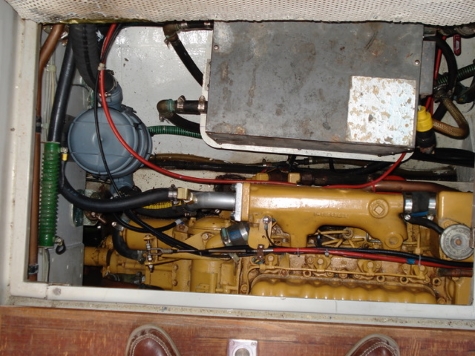


 November 24, 2016 at 20:28 in reply to: Welcome to David and Felicity, owners of Borlowen, hull #125 #25993ModeratorKeymaster
David and Felicity co-own Borlowen with their son and daughter-in-law, Ross and Suzy. Both couples have asked to join the forum, so now they both have accounts.
Ross wrote in an email:
Your forum has already been invaluable, when we were thinking of purchasing a Nicholson 38 we read lots of threads and information on the forum. It has also been very useful recently planning how to repair our rudder as the bottom half has snapped off!
Welcome to all of you, and I am delighted that the forum has already been helpful.
When you have time, I think we could all benefit from a posting about your experiences with the rudder failure and repair. As our boats age, we need to help each other know what repairs might be lurking on the horizon.
ModeratorKeymasterWe decide to install a Village Marine Little Wonder LWM-145 in the aft head space (which is no longer a head on our boat).
We used the watermaker on our Pacific crossing from the Seattle area to Hilo Hawaii. We were very happy to have it, since we did not have significant rain for the entire 29 day trip. We would run it about 45 mins a day to fill 3 gallon jugs, which kept us in drinking water. We used the tank water for cooking and washing.The unit seems to work as spec’d. I think the manual is HORRIBLE. It’s a mishmash of former information from before Parker bought the company, and new Parker information. Sometimes the information is contradictory.
We bought the unit from Oil Filter Service in San Diego. Funny name for a company that sells watermakers, but they are a large Parker distributor and so picked up these LWM models. I found Oil Filter Service to be very helpful, and I would buy from them again. They have an online shop where you can see prices. We got a good sale price during the San Diego boat show, and then had the unit shipped to Seattle for us to install it. Their technician gave us phone support during the install.
ModeratorKeymasterTo help others find this nice looking sail, here is the link on eBay UK.
Moderator
ModeratorKeymasterHere is my response to his email – I wonder how many other owners agree with me:
We have sailed our Nic 38 around 15,000 NM in 6 years. For 5 years we explored the N.A. northwest coast from British Columbia to Southeast Alaska. This is mostly protected waterways where sailing to weather is the norm in the summer season. Most recently we sailed a 3400NM passage from Washington State to Hawaii.
We love our cruising boat, find she provides great protection with the enclosed cockpit, and is a joy to sail. She’s definitely tougher than we are, and we find her easy to handle. However, it is extremely hard to bring running rigging aft because of the glass windscreen, so you must be prepared for deck work to change sail plans. She is a stable boat with her flat bottom, so deck work is OK in moderate conditions.
I can honestly say we’ve never had problems bring the boat about (i.e. tacking) unless we had only a jib deployed – of course it is the main that points the boat to windward, so it is not possible to tack when only flying a jib. We have tacked with a jib and mizzen. I would not list tacking as a problem for the Nic 38.
We are a short handed crew – my husband is the sole deck-hand as my arthritis means I cannot manage any sheets or halyards. While the primary winches are small, so is the sail area given it is a ketch with a shorter mast, so he’s not had problems handling the sheets. We have older two speed Barient self-tailing winches. I am not certain if they are original.
Sailing to windward, we can achieve an AWA of 45 degrees (or better). I would say she sails to weather extremely well provided the rigging is properly tuned. It is also important to consider the headsail area to the main/mizzen sail area as improper balance can create extreme weather helm, but knowing how to choose a sail plan and trim the sails can make the helm so balanced that she steers herself to weather.
As far as maintenance costs, you are correct the costs will depend on the condition of the boat. Given it is solid fiberglass hull and deck, with a glass deck-hull joint, there is no concerns for deck leaks or rotted cores. I can comment on some of the more common problems for Nic 38’s now that they are 40+ years of age.
We have found the original spars and standing rigging hardware to be quite robust, though we have prudently replaced all wires and turnbuckles. We have inspected many chainplates, and have found them to have minor crevice corrosion, which we were able to grind out and continue to use the chainplates. They use a very robust design, but be forewarned that the rod threads are BSF, which is an obsolete thread though nuts are still available.
Look closely at all portlights and hatches to see if they have been rebedded. Leaks around these areas are common for Nic 38’s at this age. Given the solid deck, the water damage is to the interior. It is not hard to rebed the portlights, but some owners have been unable to remove the original hatches for rebedding because of severely corroded fasteners that cannot be removed.
Also look at the stern tube and bearing. There is no cutless bearing, instead it is a white metal bearing. Try to wiggle the shaft, if it moves excessively, the white metal bearing must be replaced. This requires finding a foundry that can make one a custom bearing for you – we had one made without problems at Port Townsend Foundry in Washington state for less than $1000.
We have rebuilt our rudder, again for prudence, as some sister boat owners had their rudders fail. We found the rudder stock ready to be replaced due to crevice corrosion. Again, Port Townsend Foundry made us a custom rudder stock for a reasonable cost.
We have the original Perkins 4-108 and Thamesway gearbox, both of which perform wonderfully. One complaint is it is loud when the engine is running. I’ve read that newer engines are more quiet.
We keep a blog for our boat, http://svrainshadow.com/. You can read more about the repairs and improvements that we have made during our ownership on that blog.
In short, I would recommend the Nic 38 as a comfortable cruiser for your situation where you will be doing considerable windward sailing. We’ve probably sailed 8000 NM to windward along the NW coast and never had a problem bringing her about through hundreds of tacks. The protected center-cockpit is a must for comfortable cruising, in my mind, given we have spent years sailing in cold waters and temperate climates.
ModeratorKeymasterHi Jeff –
I didn’t mean we will fill the water tank in 3 hours of runtime, but that we will meet our needs in 3 hours runtime.We’ve learned that the 2 of us comfortably need about 4-5 gallons. Sure we could use more, but that’s enough for our normal cruising lifestyle. So if we run the unit every 3 days for 3 hours, we’ll need to produce 15 gallons usable water plus the water needed for flushing the system (maybe another 3 gallons). If we decide we need more water than that, then maybe we’ll run the unit every 2 days so we can have 7.5 gallons per day.
Our future cruising plans take us to where reliable water will not be available, so we’re going to have to do something. We’re debating on adding wing tanks to increase capacity and then rely on rainwater catchment, or install the watermaker and believe that a mechanical device will work when we need it to. Both solutions have a certain amount of faith involved.
We will update later if we decide to buy one and install it.
Marilyn
ModeratorKeymasterHi Jeff – thanks for the reply.
Yes – watermaker decisions are tough. They are not cheap and add maintenance. Do we really need one for our future cruising plans? If yes, what’s the best watermaker?
I’ve been pondering this for a couple months, reading as much as I can. We finally decided that there is no right answer, so we decided that if we get one, what is best for us is:
1) If we buy a DC model, then we can run from renewable energy when possible, and run the engine to produce DC power when desperate. Besides, an engine driven one makes me think we’d be lugging from shore jerry cans of diesel rather than jugs of water.
2) We won’t use excessive amounts of water just because we can make fresh water since running the watermaker is not free.
3) We have to run the watermaker frequently to avoid pickling, so we’ll pick a unit that in about 3 hours run time will produce our needs and run it every 2-3 days using excess renewable energy.
4) We’ll pick a DC unit that has consumables and other parts readily available from a variety of sources, rather than pick one that requires proprietary (and therefore more expensive) parts.
Hope these guesses are right for us. It’s so hard to know, without ever having used one. But I think we’re about to buy one and find out.
Marilyn
-
AuthorPosts